
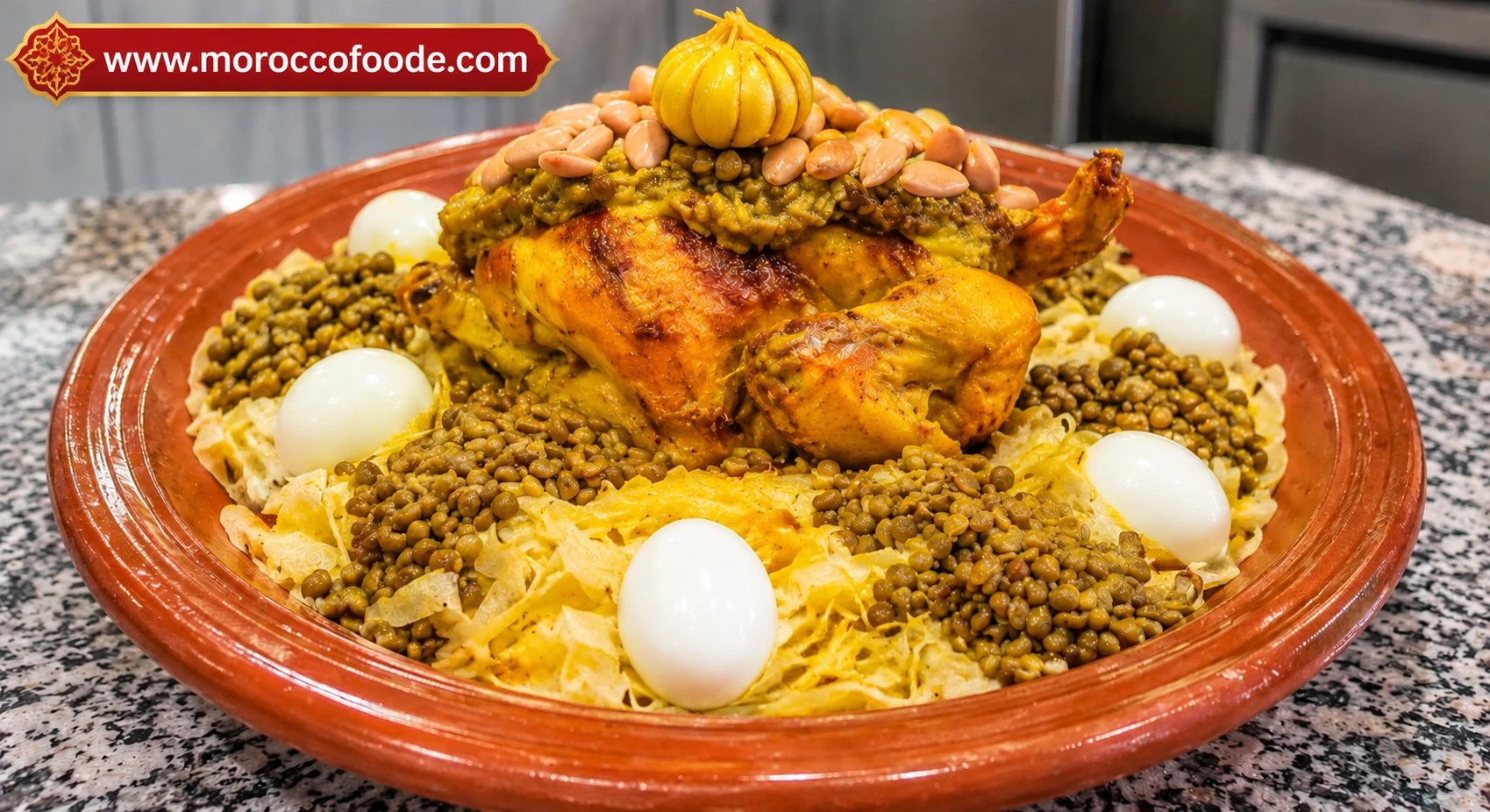
Moroccan Chicken Rfissa: A Traditional Moroccan Recipe with Lentils and Msemen
Moroccan Chicken Rfissa: A Traditional Moroccan Recipe with Lentils and Msemen
Moroccan Chicken Rfissa is one of Morocco’s most comforting and flavorful traditional dishes. Made with tender chicken, lentils, fragrant spices, fenugreek, and shredded msemen, this beloved recipe brings together rich flavors and generations of Moroccan culinary traditions.
Known locally as Rfissa or Trid, this dish is particularly popular during family gatherings, celebrations, and special occasions. Its distinctive combination of aromatic broth and soft, layered flatbread creates a delicious meal that represents the warmth of Moroccan hospitality.
Unlike many other Moroccan dishes, Rfissa is traditionally served on a large communal platter, allowing family members to gather around and enjoy the meal together.
In this guide, you will discover the ingredients, traditional preparation techniques, and step-by-step instructions for making authentic Moroccan Chicken Rfissa at home.
Moroccan Chicken Rfissa: What Makes This Traditional Dish Special?
Moroccan Chicken Rfissa is a traditional dish prepared with chicken, lentils, fenugreek seeds, onions, and a flavorful broth infused with Moroccan spices.
The chicken and lentils are slowly cooked until tender, allowing the spices and herbs to release their aromas into the broth. Meanwhile, msemen or trid, a type of Moroccan flatbread, is prepared and shredded into small pieces.
The shredded flatbread forms the base of the dish, while the chicken is placed in the center and the lentil broth is gradually poured over everything.
What makes Rfissa particularly special is the way the bread absorbs the aromatic broth, creating a wonderfully soft texture without losing its distinctive layered character.
The dish is traditionally served in a large Moroccan platter known as a gassaa. In many traditional households, especially among older generations, earthenware serving dishes are preferred because of their connection to Moroccan culinary heritage.
The Cultural Significance of Rfissa in Morocco
Rfissa is more than an everyday meal. It holds an important place in Moroccan family traditions.
One of its best-known associations is with celebrations following childbirth. Moroccan families often prepare Rfissa for new mothers, reflecting traditional beliefs about the nourishing qualities of its ingredients, particularly fenugreek.
However, Rfissa is not reserved exclusively for these occasions. It is also enjoyed during family reunions, religious celebrations, and gatherings where sharing a generous meal is part of the experience.
Preparing Rfissa can be a family activity, especially when making msemen or trid from scratch.
The careful preparation, fragrant cooking process, and communal presentation make this dish a beautiful expression of Moroccan food culture.
Ingredients for Traditional Moroccan Chicken Rfissa
To prepare authentic Moroccan Chicken Rfissa, you will need fresh chicken, lentils, traditional spices, herbs, and msemen or trid.
The following quantities are suitable for approximately 6–8 servings, depending on portion sizes.
Ingredients for the Chicken
| Ingredient | Quantity |
|---|---|
| Large chicken | 1, quartered or left whole |
| Large onions, thinly sliced | 3 |
| Olive oil | ½ cup |
| Salt | 1 tablespoon |
| Black pepper | 1 tablespoon |
| Ground ginger | 1½ tablespoons |
| Ras el Hanout or msakhen | 1 tablespoon Ras el Hanout or 1½ tablespoons msakhen |
| Ground turmeric | 1½ teaspoons |
Ingredients for the Lentils and Broth
| Ingredient | Quantity |
|---|---|
| Green or brown lentils, uncooked | ½ cup |
| Fenugreek seeds, soaked overnight and drained | 4 tablespoons |
| Saffron threads, gently heated and crumbled | 1½ teaspoons |
| Fresh cilantro, finely chopped | 1 handful |
| Fresh parsley, finely chopped | 1 handful |
| Water | 4½ cups |
| Smen (Moroccan preserved butter) | 1½ teaspoons |
Ingredients for the Flatbread
| Ingredient | Quantity |
|---|---|
| Prepared msemen, shredded | 1½ batches |
| Traditional trid pastry | Alternative to msemen |
Preparation time: Approximately 30–45 minutes, excluding overnight soaking and making msemen from scratch.
Cooking time: Approximately 1–1½ hours, depending on the chicken.
Servings: 6–8 people.
The Essential Moroccan Spices That Give Rfissa Its Flavor
The distinctive taste of Moroccan Chicken Rfissa comes from its carefully balanced combination of traditional seasonings.
One of the most important ingredients is Ras el Hanout, a famous Moroccan spice blend known for its complex aroma and warm flavors.
Some traditional recipes use msakhen, a spice mixture particularly associated with Rfissa.
Ginger contributes warmth, turmeric provides a beautiful golden color, and saffron adds a delicate fragrance.
Fenugreek, known in Morocco as helba, gives the dish its characteristic aroma and slightly bitter undertone.
Smen, a traditional Moroccan preserved butter, adds another layer of richness and depth.
If you would like to explore the ingredients that define Morocco’s culinary identity, discover our guide to traditional Moroccan spices.
How to Make Moroccan Chicken Rfissa Step by Step
Making Moroccan Chicken Rfissa involves three main stages: preparing the flatbread, cooking the chicken and lentils, and assembling the finished dish.
Step 1: Prepare the Msemen or Trid
Begin by preparing traditional Moroccan msemen or trid.
Msemen is a layered Moroccan flatbread made from dough that is stretched thin, folded, and cooked on a hot griddle.
Once cooked, allow the msemen to cool slightly before tearing or cutting it into small, bite-sized pieces.
The pieces should be small enough to absorb the broth evenly but large enough to maintain some texture.
Place the shredded msemen aside while preparing the chicken.
If you are using traditional trid pastry, separate the thin cooked sheets and shred them into narrow strips.
Step 2: Season the Chicken
Place the chicken in a large, heavy-bottomed cooking pot.
Add the thinly sliced onions, olive oil, salt, black pepper, ginger, turmeric, and Ras el Hanout or msakhen.
Mix everything thoroughly, ensuring the chicken is evenly coated with the spices.
Cook over medium heat for approximately 10 minutes, turning the chicken occasionally.
The onions should begin softening and releasing their natural juices while the spices become fragrant.
Step 3: Add the Lentils and Fenugreek
Drain the fenugreek seeds that have been soaking overnight.
Rinse the lentils under cold water and check them for any small stones or debris.
Add the lentils, drained fenugreek, crumbled saffron, chopped cilantro, and parsley to the cooking pot.
Pour in approximately 4½ cups of water and gently stir the ingredients.
Bring the liquid to a simmer, then reduce the heat and cover the pot.
Step 4: Slowly Cook the Chicken and Lentils
Allow the chicken and lentils to simmer gently for approximately 45–75 minutes, depending on the chicken’s size and type.
Stir occasionally and check the liquid level. Add a little hot water if necessary to prevent the ingredients from drying out.
The chicken should become tender, and the lentils should soften while maintaining their shape.
For food safety, the thickest part of the chicken should reach an internal temperature of 165°F (74°C).
Toward the end of cooking, add the smen and allow it to melt into the broth.
Taste the sauce and adjust the seasoning if necessary.
The finished broth should be flavorful and plentiful enough to moisten the shredded msemen.
Step 5: Arrange the Shredded Msemen
Place the shredded msemen in a large, deep serving platter.
Traditionally, many Moroccan families use a large earthenware gassaa, similar to the communal serving dishes used for couscous.
Spread the msemen evenly across the platter, creating a generous base.
If the bread has cooled completely, gently warm it before assembling the dish.
Step 6: Add the Chicken and Lentil Broth
Carefully remove the cooked chicken from the pot and place it in the center of the shredded msemen.
Arrange some of the lentils and onions around the chicken.
Using a ladle, gradually pour the hot broth over the msemen.
Do not pour all the broth at once.
Instead, add it little by little, allowing the bread to absorb the liquid before adding more.
Continue until the msemen becomes soft, moist, and infused with the fragrant chicken and lentil sauce.
Spoon the remaining lentils and onions over the platter and serve immediately while hot.
Traditional Tips for Making Perfect Moroccan Rfissa
Although Moroccan Chicken Rfissa is relatively straightforward, several details can make a noticeable difference.
Use freshly prepared msemen when possible. Homemade msemen offers a delicious layered texture that absorbs the broth beautifully.
Do not rush the chicken. Gentle simmering helps develop the rich flavor of the sauce.
Soak the fenugreek overnight. This helps soften the seeds and makes them easier to cook.
Keep enough broth for serving. Rfissa requires more liquid than many Moroccan chicken dishes because the shredded bread absorbs a considerable amount.
Add the broth gradually. This prevents the msemen from becoming excessively soggy.
Serve immediately. Rfissa is especially enjoyable when the chicken, lentils, and bread are still warm.
Msemen vs. Trid: Which Is Better for Rfissa?
Both msemen and trid can be used to prepare delicious Moroccan Chicken Rfissa, although they offer slightly different textures.
| Feature | Msemen | Trid |
|---|---|---|
| Texture | Layered and slightly chewy | Thin and delicate |
| Preparation | Folded and griddle-cooked | Cooked in thin sheets |
| Broth absorption | Excellent | Excellent |
| Availability | Common Moroccan flatbread | Traditionally prepared for Rfissa |
Trid is particularly associated with traditional Rfissa, while shredded msemen is a popular and practical alternative in many Moroccan households.
Both versions preserve the essential character of the dish.
Frequently Asked Questions About Moroccan Chicken Rfissa
What is Moroccan Rfissa made of?
Traditional Moroccan Rfissa is made with chicken, lentils, fenugreek seeds, onions, aromatic spices, herbs, and shredded msemen or trid. The ingredients are combined with a flavorful broth.
Is Moroccan Chicken Rfissa spicy?
Rfissa is richly seasoned but not necessarily hot. Its distinctive flavor comes from aromatic spices such as ginger, turmeric, saffron, and Ras el Hanout rather than chili peppers.
Can I prepare Rfissa in advance?
Yes. You can prepare the chicken, lentils, and broth in advance and refrigerate them promptly. Reheat thoroughly before serving, and assemble the dish with the msemen just before eating.
Why is fenugreek used in Moroccan Rfissa?
Fenugreek contributes a distinctive aroma and slightly bitter flavor. It is also traditionally associated with Rfissa prepared for women after childbirth.
Can I make Rfissa without trid?
Absolutely. Shredded Moroccan msemen is a widely used alternative that absorbs the flavorful broth beautifully.
Final Thoughts: Experience the Authentic Taste of Moroccan Chicken Rfissa
Moroccan Chicken Rfissa is a wonderful example of how simple ingredients can become an extraordinary traditional meal.
The combination of tender chicken, soft lentils, aromatic spices, fenugreek, and broth-soaked msemen creates a dish that is both comforting and deeply connected to Moroccan heritage.
Whether you are discovering Moroccan cuisine for the first time or recreating a cherished family recipe, preparing Rfissa offers an opportunity to experience the flavors and traditions of Morocco.
For more authentic dishes, traditional ingredients, and culinary inspiration, explore Moroccanfoode.com.
You can also discover a creative variation of the dish in this Rfissa Express recipe from My Moroccan Food, which uses pasta instead of traditional shredded flatbread.
Above all, remember that the true beauty of Moroccan Chicken Rfissa lies not only in its delicious flavor but also in the tradition of bringing people together around one generous, lovingly prepared meal.